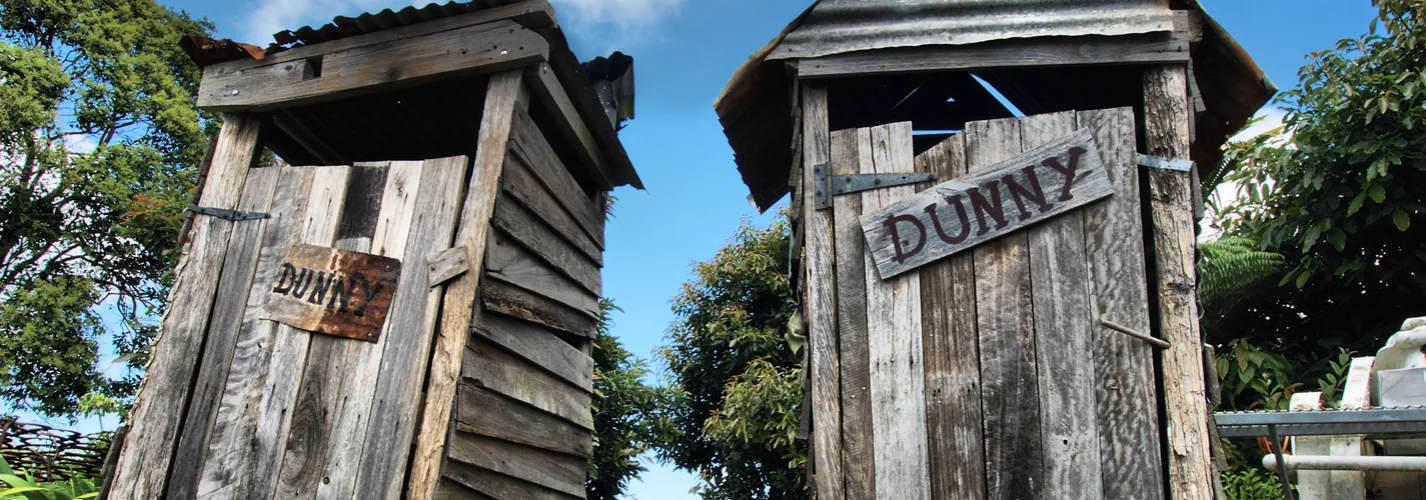
This simple outdoor structure has served a vital role for Aussies, especially in remote and rural areas where indoor plumbing was not always available. Let's take a closer look at the legend of the Australian dunny and explore its significance in Australian history and culture.
Origins of the Dunny
The history of the dunny can be traced back to the early days of Australia's settlement. As indoor plumbing was not yet available, people used a wide range of methods to dispose of their waste, including chamber pots and buckets. However, the growing population and a lack of sewer infrastructure made waste management a serious issue in major cities such as Melbourne and Sydney. In response, the government introduced rudimentary drain systems and public dunnies, which served entire neighborhoods. These public dunnies were a significant improvement, but they had their downside: they were often unsanitary and prone to overflow.
Dunnies in Rural Areas
In rural areas, the dunny played a different role. For many Australian farmers, the outdoor toilet was an essential part of their daily lives. Until the mid-20th century, most rural properties lacked indoor plumbing. Outhouses were often simple structures made from corrugated iron or timber and placed in an out-of-the-way corner of the property. These outdoor toilets provided a private and convenient place to relieve oneself, and many Aussies have fond childhood memories of visiting their grandparents' or friends' dunny.
Life with the Dunny
It's hard to think of the Australian dunny without picturing a corrugated iron structure in the middle of nowhere. Surprisingly, dunnies come in many forms, ranging from basic wooden structures to elaborate brick buildings with piped water and electricity. Of course, the humble dunny has its unique quirks – it can be hard to forget the smell or the occasional spider or snake encounter – but it remains a beloved fixture in Australian culture. The dunny is more than just a place to relieve oneself – it also serves as a symbol of resourcefulness, independence, and the spirit of the Australian people.
Dunnies Today
Today, the dunny is a rare sight in Australian cities, but it still plays a vital role in rural and remote areas. Many outback properties continue to use outhouses, although modern technology such as composting toilets and eco-friendly designs mean that the dunny has come a long way since its humble beginnings. While some Aussies may prefer indoor plumbing, the dunny remains a cherished icon of Australia's pioneering past, and it is a testament to the resilience and adaptability of Australian culture.
The Australian dunny is more than just an outdoor toilet – it's a symbol of Australia's rich history and remarkable spirit. The dunny played a vital role in early Australian life and continues to be an important fixture in remote and rural areas. While the dunny may have its downsides, Aussies never forget the unique role that it has played in their lives. And in a world where indoor plumbing is ubiquitous, the dunny remains a proud reminder of the resourcefulness and rugged individualism.