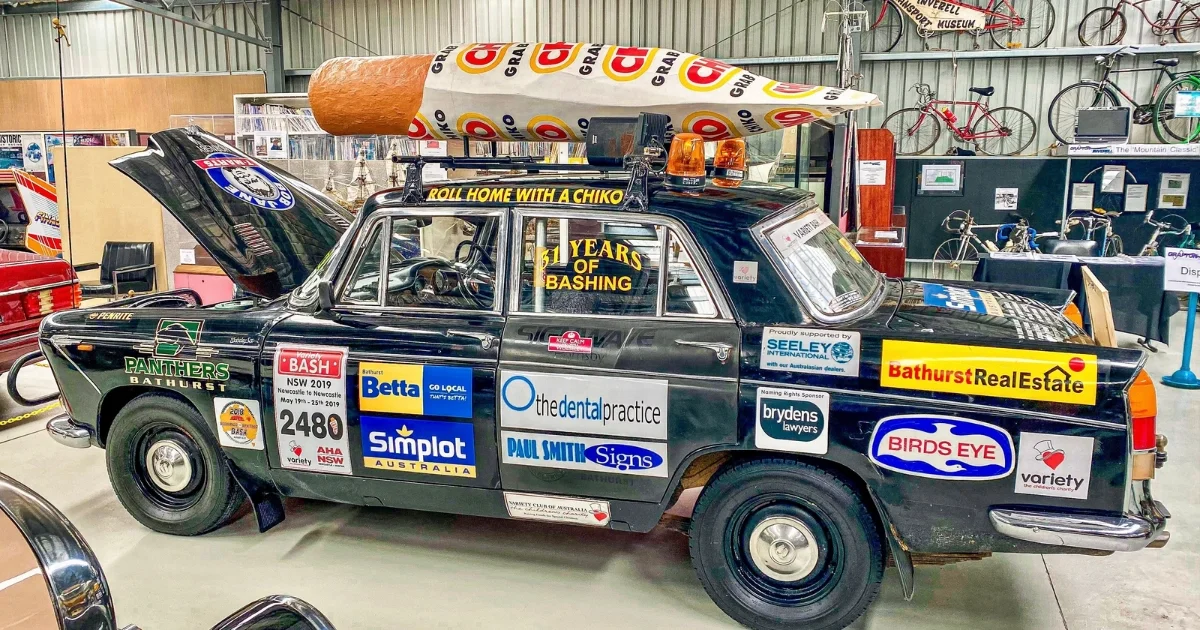
There are some foods that instantly transport Australians back to summer holidays, fish and chip shops and country showgrounds. The humble Chiko Roll sits firmly in that category. Wrapped in paper, too hot to hold properly and usually eaten with a generous squirt of tomato sauce, it has become one of Australia's most recognisable takeaway foods.
Yet despite generations of Australians growing up with them, many people still don't know one surprising fact: the Chiko Roll has never actually contained chicken. For a snack originally known as the "Chicken Roll", that's a twist worthy of its own Australian legend.
An Australian Invention
The Chiko Roll was invented by Frank McEncroe, a Victorian entrepreneur who wanted to create a hearty snack that could be eaten one-handed while attending football matches and outdoor events. Inspired by Chinese spring rolls, he developed a larger, sturdier version designed to survive being carried around sporting grounds without falling apart.
The first Chiko Roll was launched at the Wagga Wagga Agricultural Show in 1951 and quickly became a hit. By the 1960s and 1970s it was a staple of fish and chip shops, milk bars and takeaway stores across Australia. At its peak, millions were being sold every year, cementing its place as a genuine Australian icon.
So What's Actually Inside?
For decades many Australians assumed the Chiko Roll contained chicken. The reality is quite different.
The filling is largely made up of vegetables and grains. Modern Chiko Rolls contain cabbage, carrots, celery, onions, green beans and barley, along with a small amount of beef. The mixture is combined with seasonings and enclosed in the product's signature thick pastry coating before being deep fried until golden and crispy.
That means the famous Chiko Roll is far more vegetable-based than many people realise. While it may have earned a reputation as classic takeaway fare, its ingredients tell a slightly different story.
Why Was It Called a Chicken Roll?
The original product was marketed as a "Chicken Roll" despite containing no chicken. The name was later shortened to "Chiko Roll", creating the brand that Australians know today. The revised spelling gave the snack its own identity while keeping the familiar sound that customers already recognised.
More than seventy years later, the name remains one of Australia's great food mysteries, with countless Australians still surprised to learn that chicken was never part of the recipe.
A Cultural Icon
The Chiko Roll's success wasn't really about what was inside. It was about convenience. Long before fast-food chains became common across Australia, the Chiko Roll provided a quick, filling meal that could be eaten with one hand while walking through a showground, watching the footy or heading to the beach.
For many Australians it became part of the experience of growing up. The aroma from a takeaway fryer, the crunch of the pastry and the inevitable battle to avoid burning your mouth on the first bite remain shared memories across generations.
Still Rolling On
Today the Chiko Roll continues to occupy a unique place in Australian food culture. It may never win awards for gourmet cuisine, but that's not really the point. Like dim sims, meat pies and sausage rolls, it tells a story about Australia's love of practical, satisfying food built around our lifestyle.
For travellers exploring Australia, stopping at a country fish and chip shop and seeing a Chiko Roll warming in the display cabinet is a reminder that some traditions never disappear. They simply become part of who we are.
Not bad for a "Chicken Roll" that never contained any chicken.