- Destinations
- Nature & Wildlife
- Culture & History
- Travel Planning
- Australian Life
- Kangaroo Jacks Gift Co.
- Aussie Kids


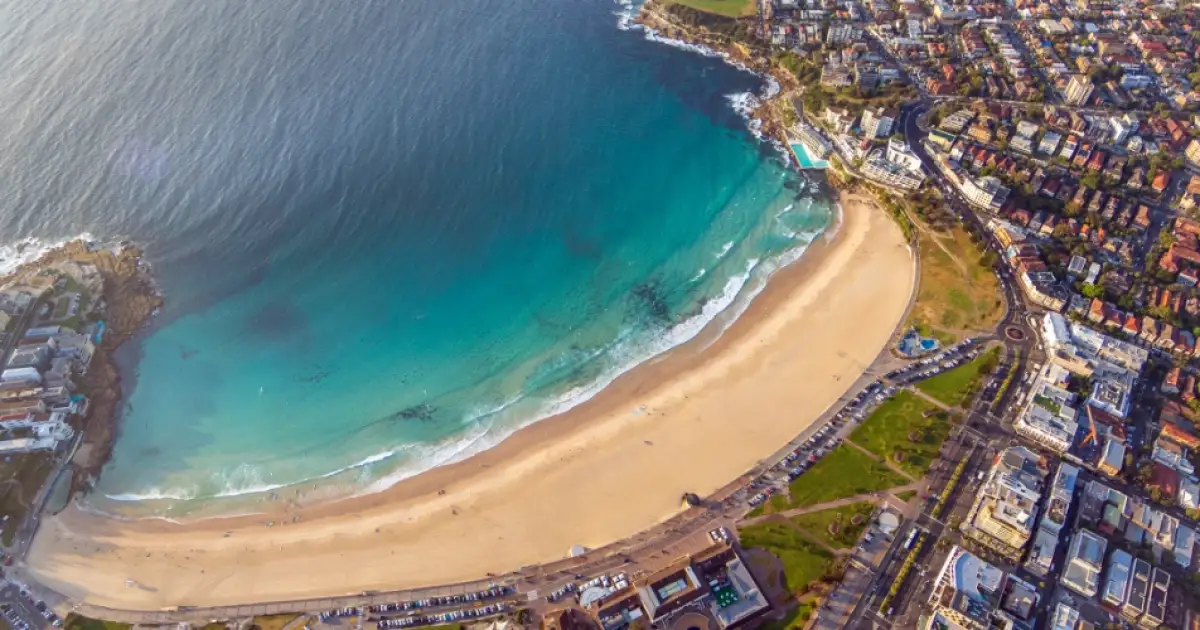
The Bondi Surf Pavilion, in Sydney, is an outstanding beach cultural icon of Australia, together with the beach, park and surf lifesaving club.
Sea bathing gradually changed from a restricted dangerous activity in NSW to a popular pastime in the later 19th century. Bondi Beach was opened to the public as a popular picnic spot in 1855. People went to the beach for a picnic, but they seldom went swimming. Surf bathing had become a mass leisure pursuit after World War One. Plans were then made to include a kiosk and surf sheds, three lavatory blocks, a band stand, parks to surround the buildings and increased car and pedestrian facilities. It had extensive dressing cubicles, which were originally in two courtyards on the ground floor of the building. One courtyard was for men and the other for women, and the individual changing booths were constructed in rows in each courtyard. It also had Turkish and hotwater baths, shops, a ballroom, cabaret theatre, an auditorium and a cafe. Tunnels leading from the two courtyards passed underneath Marine Parade (now Queen Elizabeth Drive) to a pair of concrete groynes which opened onto the beach.
The Bondi Pavilion was use extensively for about two decades after its opening. During the war the first floor was requisitioned by the American Red Cross and the U.S. military to become an officers' club until the end of the war. After the war, dances were organised at the pavilion, and the proceeds went to disadvantaged Australian returned soldiers. By the mid-1950s bathing costumes decreased in size which reduced the need for changing rooms. Use of the pavilion started to decline. In 1977 & 1978 the change rooms, lockers, former Turkish baths and courtyard were demolished.They were replaced with a netball court, an art gallery, a gymnasium and an amphitheatre.
Today the pavilion is still a community centre. It has a theatre, a gallery and rehearsal, meeting and function rooms. Many cultural and film festivals are held at the building, and shops, changing rooms and toilets are still available to the public.
According to the National Trust it "has come to represent the Australian culture of beach bathing and outdoors living"