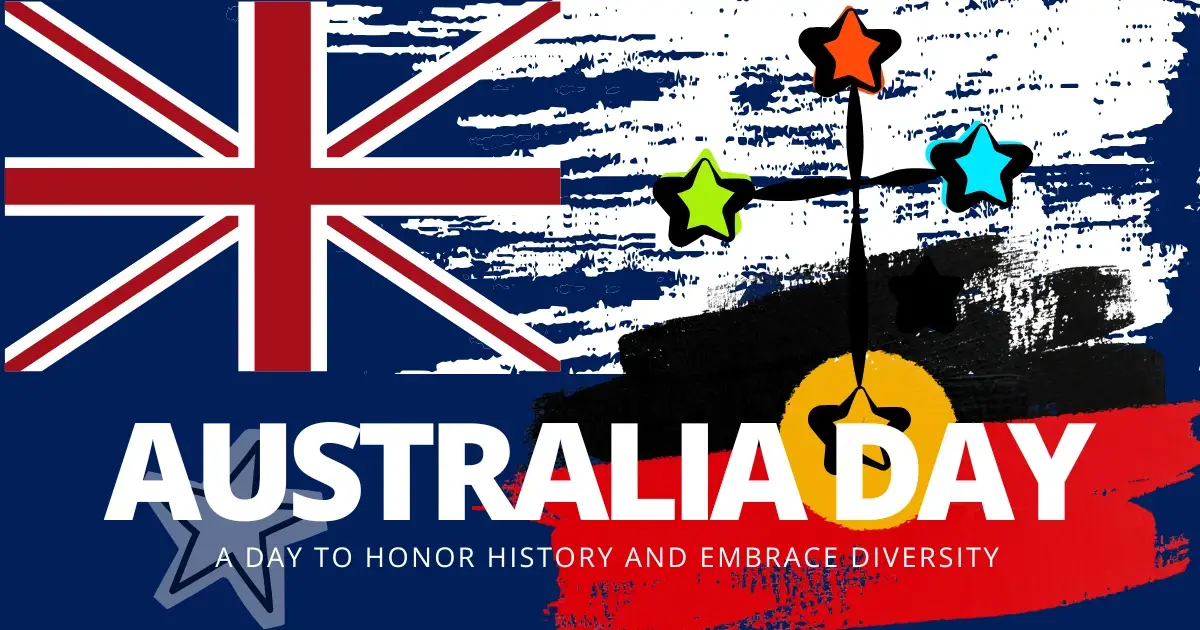
For many Australians, Australia Day has long been a chance to fire up the barbie, hit the beach & celebrate a shared sense of identity. The date, 26 January, marks the arrival of the First Fleet in 1788 and the raising of the British flag at Sydney Cove. Over time, it has become tied to citizenship ceremonies, community events and a general feeling of national pride.
For those who embrace it, Australia Day is about belonging, multiculturalism and recognising how far the country has come. It is seen as a day to say, “This is home,” and to celebrate the people & stories that make up modern Australia.
Why some call it Invasion Day or Survival Day
For many Aboriginal & Torres Strait Islander peoples, the 26th of January is not a day of celebration but a day of deep hurt. It marks the beginning of colonisation, dispossession and frontier violence. The arrival of the First Fleet signalled the loss of land, language, culture & sovereignty for First Nations communities.
Because of this, the date is often referred to as Invasion Day, Survival Day or a Day of Mourning. This is not a new idea. As far back as 1938, Aboriginal leaders declared the 26th of January a Day of Mourning, protesting the ongoing denial of rights & recognition. Today, large rallies and gatherings on that date call for truth-telling, justice and respect for First Nations sovereignty.
Why the debate is so passionate
The clash over the 26th of January is about much more than a public holiday. It goes to the heart of identity, history and whose story is centred when the nation celebrates. For some, the date represents pride & progress. For others, it represents invasion & ongoing inequality.
The debate is also fuelled by the fact that the impacts of colonisation are not just historical. Many First Nations communities still experience poorer health outcomes, higher incarceration rates and ongoing disadvantage. Celebrating on the date that marks the start of that history can feel, to them, like celebrating their suffering.
Politics & media commentary add extra heat, often turning a complex conversation into a culture war. As more councils, organisations and younger Australians question the date, the discussion has only grown louder.
What day should Australia Day be on?
There is no single agreed answer to this question, but a few main options keep coming up. Some argue the date should stay put, saying tradition matters and that the day is for everyone, regardless of its origins. Others believe that if the national day causes pain for many First Nations people, it is worth changing.
Suggestions for a new date include choosing a day that marks a more unifying moment, such as Federation on the 1st of January, the 1967 Referendum, Mabo Day, or simply a neutral day in January that is not tied to invasion. One popular idea is to move the holiday to a set Monday in late January, creating a long weekend without anchoring it to the 26th of January.
A smaller group argues that instead of a celebratory Australia Day, the country should have a National Day of Reflection or truth-telling, with any celebration coming only after a treaty or significant structural change.
Finding a way forward
The debate over Australia Day & Invasion Day is unlikely to disappear any time soon. It taps into big questions about who Australians are as a people, how honestly the nation faces its past and how it wants to move forward together.
What is clear is that the 26th of January does not mean the same thing to everyone. For some, it is a day of pride. For others, it is a day of grief & survival. Any future decision about the date will need to reckon with both realities if it is to feel genuinely inclusive.
In true Aussie fashion, the challenge is to have the hard conversations, listen properly and see if a fairer, more honest way of marking the nation’s story can be found. One that leaves room for both celebration and respect.